
Map reading is a practical skill that becomes easier with experience, but even seasoned walkers and outdoor enthusiasts occasionally make mistakes. Most navigation errors are not caused by faulty maps or equipment, but by small oversights that gradually lead to confusion.
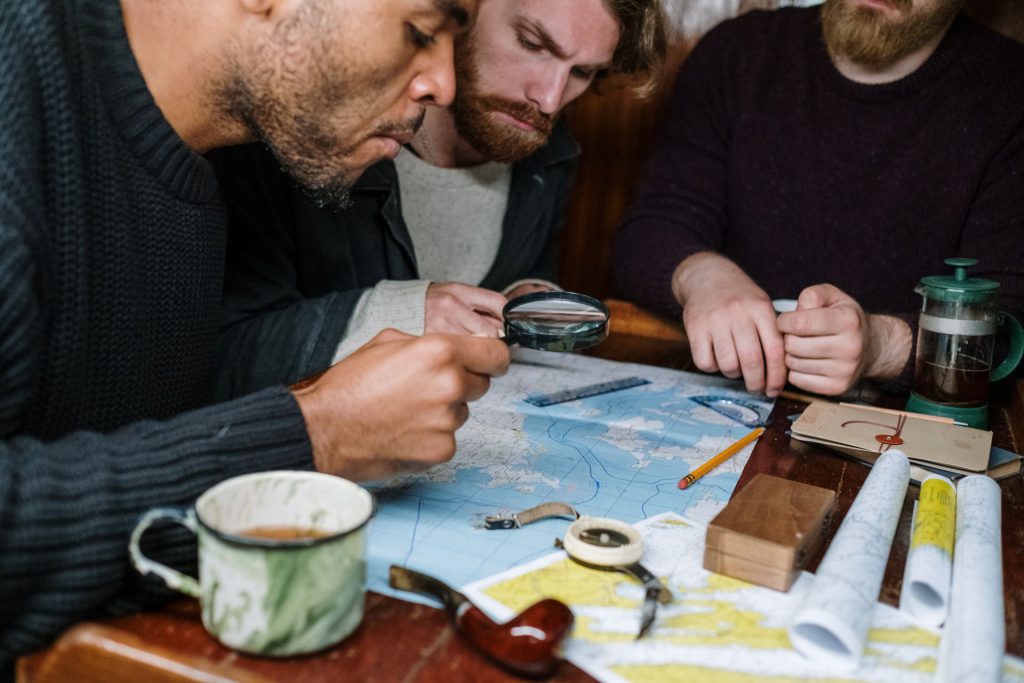
Fortunately, many of the most common mistakes are easy to avoid with a little preparation and regular practice. Here are ten map-reading errors that catch people out, along with simple ways to prevent them.
1. Holding the Map the Wrong Way Round
One of the easiest mistakes to make is looking at a map without first orientating it to match the landscape around you.
If north on the map does not point north in the real world, roads, rivers and landmarks can appear to be in completely different places.
How to avoid it:
- Use a compass to orientate your map.
- Match visible landmarks with those shown on the map.
- Recheck the map whenever you change direction.
2. Ignoring the Map Scale
A kilometre on one map may occupy far more space than on another. Assuming all maps are drawn to the same scale can lead to poor route planning and incorrect estimates of walking time.
Different activities require different levels of detail.
| Scale | Best For |
|---|---|
| 1:25,000 | Detailed walking and hiking |
| 1:50,000 | General outdoor navigation |
| Smaller scales | Regional planning and road travel |
Always check the scale before estimating distances.
3. Reading Grid References in the Wrong Order
Grid references should always be read eastings first, then northings.
Many beginners accidentally reverse them, resulting in an entirely different location.
A useful reminder is:
Along the corridor, then up the stairs.
This simple phrase helps many people remember the correct sequence.
4. Forgetting About Contour Lines
A route may appear short on paper but involve several steep climbs.
Distance alone rarely tells the whole story.
Before setting out, look at:
- Contour spacing
- Total ascent
- Valleys
- Ridges
- Steep slopes
Factoring elevation into your plans often results in a more enjoyable walk.
5. Depending Entirely on GPS
Smartphones and GPS devices are incredibly useful, but they should not be your only navigation tool.
Electronic devices can fail because of:
- Flat batteries
- Poor satellite reception
- Water damage
- Software issues
- Accidental drops
Carrying a paper map provides an important backup if technology lets you down.
6. Failing to Check Your Position Regularly
Some people continue walking for long periods before checking whether they are still on the correct route.
By the time they realise something is wrong, they may have travelled several kilometres in the wrong direction.
Instead, make a habit of confirming your location whenever you reach:
- A junction
- A bridge
- A hilltop
- A woodland edge
- A stream crossing
- A distinctive landmark
Small checks throughout the journey are far easier than trying to recover from a major mistake.
7. Misinterpreting Map Symbols
Not every dashed line is a footpath, and not every coloured area represents woodland.
Every map publisher includes a legend explaining the symbols used.
If you’re using an unfamiliar map, spend a minute looking at the key before you begin your journey. It can prevent misunderstandings later.
8. Walking Too Quickly
Navigation requires observation.
Moving too quickly without checking the map often leads to missed junctions and overlooked landmarks.
A good routine is to:
- Stop briefly at decision points.
- Confirm your direction.
- Compare the surroundings with the map.
- Continue only when you’re confident.
A thirty-second pause can save twenty minutes of backtracking.
9. Assuming the Shortest Route Is the Best
The shortest distance between two points is not always the easiest or safest route.
A slightly longer path may avoid:
- Steep climbs
- Marshy ground
- Dense woodland
- Busy roads
- Difficult river crossings
When planning a journey, think about the terrain as well as the distance.
10. Not Preparing Before You Leave
Many navigation problems begin before the walk even starts.
Taking a little time to study your route makes it much easier to recognise landmarks and anticipate potential challenges.
A few minutes of preparation should include:
| Before You Leave | Why It Helps |
|---|---|
| Study the map | Understand the route |
| Check the weather | Prepare for changing conditions |
| Estimate walking time | Avoid finishing in darkness |
| Charge electronic devices | Reduce the risk of losing navigation |
| Pack a compass | Provides a reliable backup |
Preparation is one of the simplest ways to improve both safety and confidence.
A Few Extra Tips
If you’re still developing your navigation skills, these habits can make a real difference:
- Fold your map to show only the area you’re using.
- Keep the map dry in a waterproof case.
- Learn to recognise major landscape features.
- Practise taking compass bearings.
- Compare digital maps with printed versions.
- Tell someone where you’re planning to go.
Good navigation is built on a series of small, sensible decisions rather than one complicated technique.
Confidence Comes with Practice
Everyone makes mistakes while learning to read maps. The important thing is recognising them early and understanding how to avoid repeating them. As your experience grows, you’ll become quicker at interpreting contour lines, recognising symbols and identifying landmarks.
Whether you’re planning a gentle countryside stroll or a more demanding hill walk, improving your map-reading skills will help you travel more confidently, make better decisions and enjoy your time outdoors with greater peace of mind.